


 Share
Share
Updated for 2026
Adding gut-friendly foods and probiotic supplements to your routine can help sustain weight loss. They can also help stave off obesity-related health conditions. The trick is finding the right one for you.
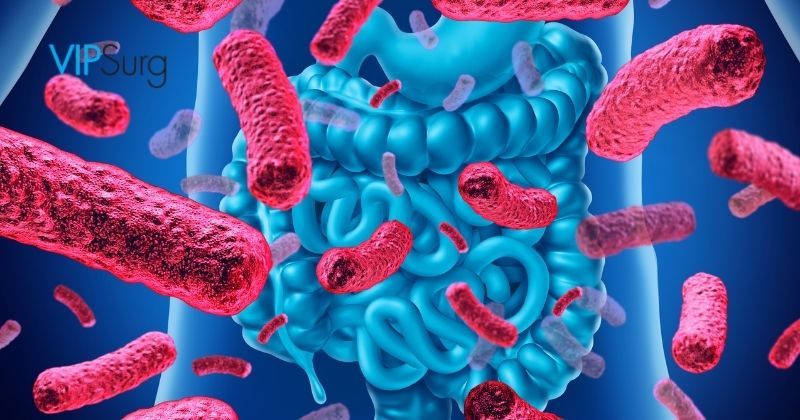
Gut bacteria, like the ones illustrated here, can have definite benefits, maybe even for weight loss, according to Strive Surgery.
Everyone’s gastrointestinal (GI) tract has a natural balance of “good” and “bad” bacteria. This mixture of bacteria contributes to the system by aiding in digestion and immune support, among many other things.
After weight loss surgery, the digestive tract undergoes significant changes, and regardless of what procedure you choose, it is likely your gut microbiota will shift. Because of the state of chronic inflammation and metabolic dysfunction that coincides with obesity, we know that the gut flora of obese individuals tend to be imbalanced and less diverse than those with a healthy body mass index (BMI).
Multiple studies have emerged over the last several years regarding the use of probiotics, specifically in post-bariatric surgery patients. Explorations of the weight loss effects, as well as the effects on obesity-related health conditions, are producing some encouraging results.1 So, should you be taking a probiotic supplement?
What Affects Your Gut Balance?
There are several factors that play into your gut flora. With bariatric surgery, changes in intestinal motility and acid secretion in the stomach both impact your gut health. These changes can impact important functions like vitamin absorption, namely that of vitamin B12.
What and how you eat has a large impact on the strains of bacteria that occur in your GI tract. High sugar and high fat diets feed what we call “bad” bacteria in the gut that are known to contribute to increased absorption of calories and crowd out the growth of “good” bacteria. We also now know that these bad bacterial players also increase the incidence of systemic inflammation. Foods that are high in fiber benefit the “good” bacteria that aid in controlling metabolic function and slow or prevent the growth of harmful bacteria. These “good guys” also aid in reducing inflammation and protecting the intestinal barrier.
Some high fiber foods are known as prebiotics as they encourage the healthy strains of bacteria and help them to thrive. These prebiotic foods include beans, garlic, onions, barley, oats and apples. Probiotics also naturally exist in some foods, including yogurt with active cultures and fermented foods like kimchi, pickled vegetables, and sauerkraut. An important note, check if your fermented foods are pasteurized, as this process kills the bacteria you are hoping to consume. Also, not all yogurts are created equal, so be sure to pick one that is fortified for gut health.
A few things other than food affect your gut microbiome as well. Antibiotics, commonly used to knock out an infection, also take a harsh toll on your gut bacteria, both the good and the bad. Other factors, like if produce was treated with certain pesticides, can harm the healthy gut bacteria.
How to Get Started With Probiotics
For most everyone, probiotic supplements are considered safe.2 Still, it is always recommended to discuss any supplements you are considering adding to your diet with your doctor or healthcare team. Most people can benefit from increasing the amount of healthy bacteria in the gut. This can be done by introducing pre- and probiotic foods into your regular diet and limiting fat and sugar.
Altering your gut balance can also be achieved with a well-chosen probiotic supplement. If you choose to go the supplementation route, after discussing with your doctor, be sure to do your research and choose carefully. There are countless strains of bacteria and it is better to take advantage of formulas with multiple types.
Basic recommendations are to look for a supplement with at least 1 billion colony forming units, or CFUs, but it appears that probiotics with at least 5 billion CFUs per dose that contain at least seven strains of probiotics may be most effective. You should look for a supplement that contains the genus lactobacillus, bifidobacterium, or Saccharomyces boulardii. These are some of the most researched probiotics, and they do more than just help with digestion. Lactobacillus species protect against invader pathogens, while bifidobacterium has been studied for its ability to reduce inflammatory bowel disease.3-4 Saccharomyces boulardii has also been studied for its ability to resist antibiotics.5 If you are looking to address a specific concern, say weight loss, look for a supplement that includes strains that have been researched for the desired effect.
Are There Downsides of Probiotics?
For some people, existing conditions cause immune suppression. If your immune system is compromised, or you’re not sure if an existing condition you have may cause immune suppression, it is best to not start a new supplement on your own. Get clearance from your physician first.
Generally, the only side effect of adding a probiotic to your diet is a short adjustment period. Some people will experience a short-term increase in gas, bloating, or diarrhea. Because there are so many strains of bacteria and many brands to choose from, you may have to experiment with different formulations to find the one right for you.
Can Using Probiotics Mean Greater Weight Loss?
Research has shown increased weight loss for bariatric patients using probiotics. A study at Stanford University School of Medicine found that of the gastric bypass patients participating in the study, those using a probiotic supplement lost 10% more weight than those in the control group who had not been taking a probiotic.6
Knowing that gut flora varies between obese and non-obese individuals has led to new studies using techniques including fecal transplant to determine how a change in one’s gut microbiome impacts weight. As researchers learn more, it seems that more support is found for improving the balance of “good” and “bad” bacteria specifically for weight loss.
With bariatric patients, introducing a probiotic has shown increased weight loss, decrease in post-op GI distress, reduction in obesity-related health conditions, and increase in B12 levels. If you’re curious about adding a probiotic to your supplementation or how to make your diet more gut friendly, talk to your healthcare provider about how and when is best for you.
Strive Surgery is located in Las Vegas, Nevada, and our goal is to help you improve your health and quality of life through the highest standard of bariatric and abdominal surgical care. For more information or to schedule a consultation, you can connect with our team online and by calling (702) 448-5578.
- de Sousa, D. F., & Salaroli, L. B. (2024). Effects of the Use of Probiotics in Post-Bariatric Surgery Obesity: Meta-Umbrella of Systematic Reviews. Obesities, 4(4), 491–508. https://doi.org/10.3390/obesities4040039.
- Probiotics and Microbiota in Bariatric Surgery. (2018). Clinicaltrials.gov. https://clinicaltrials.gov/study/NCT01922830.
- Dempsey, E., & Corr, S. C. (2022). Lactobacillus spp. for Gastrointestinal Health: Current and Future Perspectives. Frontiers in immunology, 13, 840245. https://doi.org/10.3389/fimmu.2022.840245.
- O’Callaghan, A., & van Sinderen, D. (2016). Bifidobacteria and Their Role as Members of the Human Gut Microbiota. Frontiers in microbiology, 7, 925. https://doi.org/10.3389/fmicb.2016.00925.
- Ciorba M. A. (2012). A gastroenterologist’s guide to probiotics. Clinical gastroenterology and hepatology : the official clinical practice journal of the American Gastroenterological Association, 10(9), 960–968. https://doi.org/10.1016/j.cgh.2012.03.024.
- Stanford Medicine News Center. (2009, July 13). Probiotics help gastric-bypass patients lose weight more quickly, Stanford study shows. Stanford School of Medicine. https://med.stanford.edu/news/all-news/2009/07/probiotics-help-gastric-bypass-patients-lose-weight-more-quickly-stanford-study-shows.html.